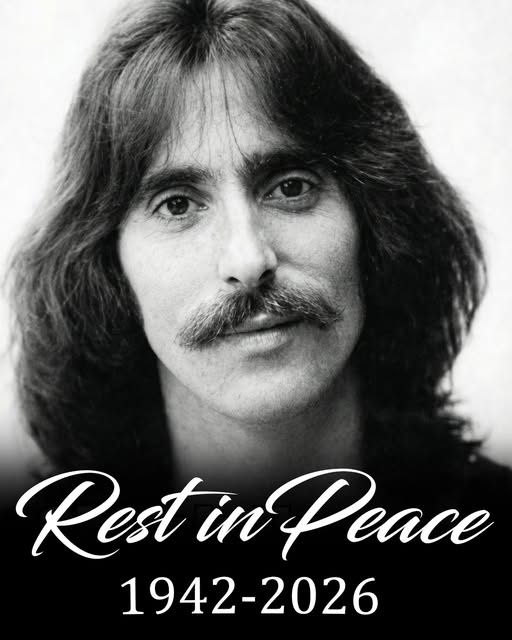
The velvet-and-grit tenor that defined the soundtrack of the late 1960s and early 70s has reached its final cadence. Chuck Negron, the iconic founding member of Three Dog Night whose soaring lead vocals propelled the band to the stratosphere of rock history, passed away on Monday, February 2. He was 83.
Negron died at his home in Studio City, California, surrounded by his family. According to a statement released by his publicist, the legendary singer had been battling a courageous dual fight against heart failure and chronic obstructive pulmonary disease (COPD) in his final months.
“Negron was a testament to never giving up,” his representative stated. “Persevering through everything life throws at you, everything you may throw at yourself, and striving on.”
From the Bronx to the Apollo
Born on June 8, 1942, Negron’s journey began in a modest Bronx apartment. The son of Charles Negron, a Puerto Rican nightclub performer, and Elizabeth Rooke, he was immersed in the rhythms of New York City from birth. While he spent his youth divided between the basketball courts and street-corner doo-wop sessions, his prodigious vocal talent quickly demanded a larger stage.
By age 15, Negron had already cut his first record. He soon found himself standing on the hallowed stage of the Apollo Theater with his group, The Rondells. As a rare white act in the legendary venue, the stakes were high.
“We were not just the only white group in the building,” Negron recalled in a 2004 interview with the Rapid City Journal. “But by our second verse, something magical happened. The audience started to cheer us on.” It was a formative lesson in the universal language of melody—one that proved music could dismantle social barriers and unite disparate souls.
The Architect of Harmony
Negron eventually moved west on a basketball scholarship to California State University, but the siren song of the burgeoning Los Angeles music scene proved irresistible. In 1967, he joined forces with Danny Hutton and the late Cory Wells to form Three Dog Night.
The group became a commercial juggernaut, distinguished by a three-part vocal attack that was as precise as it was powerful. Negron’s voice became the primary vehicle for the band’s most enduring anthems. It was his soulful delivery that gave life to the chart-topping “Joy to the World (Jeremiah Was a Bullfrog),” the hauntingly stark “One (Is the Loneliest Number),” and the emotive “Easy to Be Hard.” Other hits, including “Old Fashioned Love Song” and “The Show Must Go On,” cemented the band as a staple of Top 40 radio.
A Nightmare and a Resurrection
At their zenith, Three Dog Night was a touring powerhouse. However, the pressure of fame fractured the group. Their 1976 collapse was a public tragedy fueled by internal friction and heavy drug use. Negron’s subsequent descent into heroin addiction became one of rock’s most harrowing cautionary tales—a journey he survived and later chronicled with unflinching honesty in his 1999 best-selling memoir, Three Dog Nightmare.
After reaching sobriety in 1991, Negron reclaimed his life and his art. He launched a prolific solo career, releasing seven albums between 1995 and 2017, proving that his instrument had lost none of its emotional resonance.
In a poignant final chapter, Negron and his longtime estranged bandmate Danny Hutton finally bridged a decades-long divide last year. His publicist confirmed the reunion was a “timely effort to exchange apologies and bury the hatchet,” allowing two architects of the California sound to find peace before the end.
A Legacy of Perseverance
Even as COPD made the act of breathing a challenge, Negron’s devotion to his fans remained unshakable. He continued to tour well into his late 70s, only retreating from the stage when the global COVID-19 pandemic made public performances an impossibility.
“Through his six decades of success, and all the ups and downs, his large, unconventional family was most important to him,” his publicist noted.
Chuck Negron is survived by his wife, Ami Albea Negron, and five children: Shaunti Negron Levick, Berry Oakley, Charles Negron III, Charlotte Negron, and Annabelle Negron.
In the annals of rock and roll, Negron will be remembered not just for the hits that made the world sing, but for the grit it took to sing them after the music almost stopped.