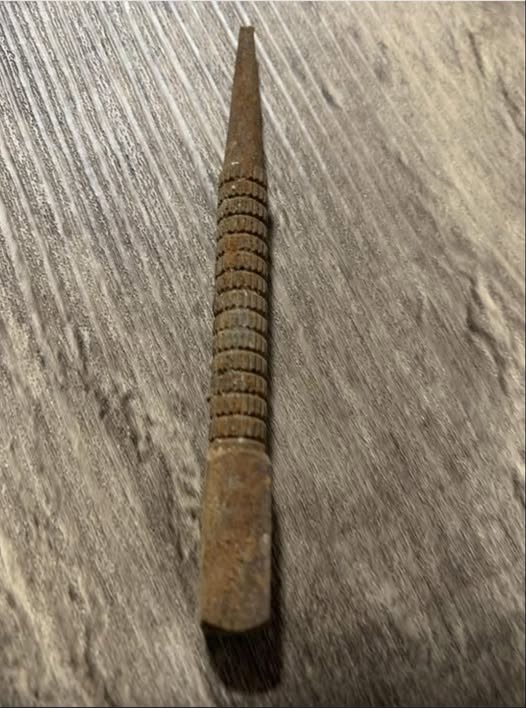
In an era of high-speed power drivers and pneumatic framing guns, it is rare to encounter an object that truly forces a modern DIYer to pause and scratch their head. Occasionally, you find a tool so unassuming that you have to turn to a veteran carpenter—or the collective wisdom of the internet—to decipher its purpose. If you have ever unearthed a small, tapered metal rod in the bottom of a toolbox and wondered about its utility, you have found the “unsung hero” of the construction world: the nail punch. While it lacks the flash of high-tech gadgets, the nail punch—also known as a nail set—boasts a lineage that traces back to ancient civilizations. Long before mass production, craftsmen required innovative methods to manage the aesthetics of their joinery. In its earliest iterations, builders utilized rudimentary chisels or hardened stones to drive fasteners beneath the grain, a necessity for both decorative flourishes and functional smooth finishes. Historical sources suggest that these implements may actually be descendants of the very first tools used by our prehistoric ancestors to carve stone or fashion clothing. Despite their simple construction, their versatility has made them a permanent fixture in tool collections for millennia.
The Mechanics of the “Set”
Technically speaking, a nail punch is a slender, handheld instrument designed for one specific task: driving a nail head slightly below the surface of the material, usually timber. The tool features a precision-machined pointed tip that aligns perfectly with the nail head and a blunt striking end. When hit with a hammer, it transfers the force directly to the fastener without the surrounding wood ever making contact with the hammer’s face.
As noted by Britannica, the primary goal is to create a “small depression” that can later be filled with putty or wood wax, rendering the fastener completely invisible to the naked eye.
From the Forge to the Factory: The Industrial Evolution
The Industrial Revolution triggered a massive shift in tool manufacturing, and the nail punch was no exception. As factories began the mass production of nails, the industry demanded consistent, specialized tools that could accommodate varying diameters and woodworking requirements.
Through the decades, the punch evolved into a precision instrument. Carpenters realized that sinking a nail did more than just improve the “curb appeal” of a piece of furniture; it increased the structural longevity of the project. By burying the metal head beneath a layer of filler, craftsmen effectively sealed the fastener away from the elements, preventing the rust and wear that often lead to “nail sickness” in older structures.
The 21st Century Punch: High-Carbon Steel and Ergonomics
Fast forward to 2026, and the nail punch has embraced the cutting edge of metallurgy. No longer just a simple iron rod, modern versions are frequently forged from high-carbon steel or lightweight titanium. To meet the demands of professional contractors, many now feature ergonomic, cushioned grips to provide comfort and prevent slippage during repetitive use.
The Essential Specs:
-
Material: Forged from high-durability metals like steel or titanium to endure thousands of hammer strikes.
-
Design: Tapered or cylindrical bodies with a “cupped” tip to prevent the tool from sliding off the nail head.
-
Sizing: Typically sold in sets with color-coded or laser-etched markings to match specific nail gauges.
A Permanent Place in the Power Tool Age
One might argue that in an age of cordless trim nailers, a manual tool like the nail punch would be obsolete. However, in the worlds of high-end cabinetry, historical restoration, and delicate trim work, the “manual touch” remains irreplaceable.
The nail punch offers a level of precision that power tools simply cannot replicate. It allows a restorer to work on a 200-year-old mahogany desk or a hobbyist to finish a jewelry box without the risk of a misfiring nail gun “shining” or marring the wood. Furthermore, the introduction of spring-loaded and automatic versions has reduced the physical strain, allowing for one-handed operation in tight corners.
The nail set may never have the glamour of a laser-guided miter saw, but its journey from a prehistoric stone to a titanium instrument underscores its fundamental importance in the craft of building.
So, take a look in that old junk drawer or the tray of your toolbox. Do you have one of these quiet legends hiding in the dark?