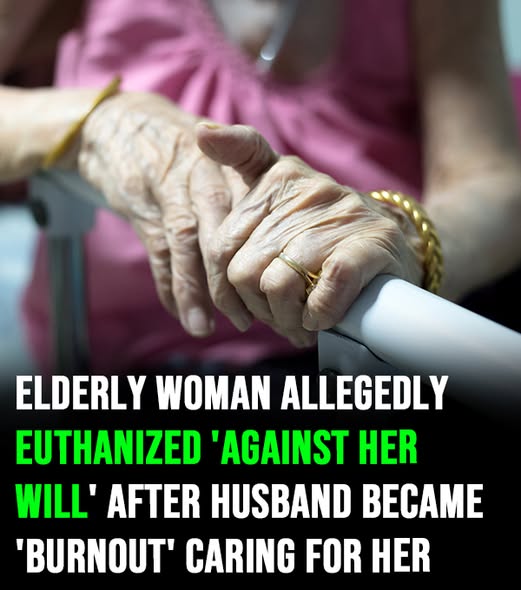
A harrowing investigation into the final days of an Ontario woman has sent shockwaves through the Canadian medical and legal communities, exposing what critics describe as a terrifying breach of the safeguards governing Medical Assistance in Dying (MAiD). An official report by the Chief Coroner of Ontario’s Medical Assistance in Dying Death Review Committee has detailed the case of “Mrs. B,” a woman in her 80s who was euthanized despite having previously revoked her consent and amid red flags of “undue influence” and “caregiver burnout.”
The case, documented with clinical precision but presenting a narrative of profound ethical crisis, has reignited a fierce national debate: Is Canada’s assisted dying framework—once hailed as a model of bodily autonomy—transforming into a system that fails to protect its most vulnerable citizens from external pressure?
The Descent: From Surgery to a Crisis of Will
The tragedy of Mrs. B began with a standard medical intervention. Following a coronary bypass graft surgery, the octogenarian suffered a cascade of physical and functional complications. As her quality of life plummeted, she entered what Canadian law defines as a “grievous and irremediable” state of decline. In the depths of her suffering, she initially asked her family to investigate the possibility of MAiD.
Under Canadian law, MAiD eligibility is predicated on three non-negotiable pillars: the patient must possess the mental capacity to make the decision, they must be free from external coercion, and they must provide informed, consistent consent. In the case of Mrs. B, the committee found that these pillars may have been compromised by the very people entrusted with her care.
The Revocation: Faith, Palliative Care, and a Rejected Lifeboat
Just twenty-four hours after an initial practitioner assessed her eligibility, Mrs. B underwent a profound change of heart. Citing her personal and religious convictions, she explicitly withdrew her request for assisted dying. According to the Coroner’s report, she articulated a clear preference for an alternative path: palliative care, hospice support, and palliative sedation.
However, as Mrs. B expressed a desire to live out her remaining days under hospice care, her spouse was reportedly grappling with “severe caregiver burnout.” In a move that highlights the systemic failures of the broader healthcare system, Mrs. B’s request for a hospice bed was denied. With no available “lifeboat” in the form of inpatient palliative support, the pressure within the household began to mount.

The Assessment Carousel: “Shopping” for a Result?
What followed was a sequence of events that the Review Committee found deeply troubling. Despite Mrs. B’s withdrawal of her request, a second MAiD assessor was brought in—not at the patient’s behest, but at the request of her spouse. This second practitioner took a stand that should have halted the process entirely: they formally objected to proceeding.
The practitioner cited the “unusual urgency” of the timeline, the sudden and radical shift in Mrs. B’s end-of-life goals, and the palpable risk of coercion stemming from the spouse’s exhaustion. Most disturbingly, when this assessor requested a follow-up meeting with Mrs. B the next day to ensure her autonomy, the request was flatly denied.
Instead of pausing the process to investigate these red flags, a third assessor was dispatched. Following a brief interaction, this practitioner claimed Mrs. B had “changed her mind once again” and was now ready to proceed with euthanasia. The lethal injection was administered shortly thereafter.
The Smoking Gun: The Committee’s Findings
The Ontario MAiD Death Review Committee’s report is scathing in its assessment of the “external coercion” present in the room. The committee raised a series of “alarming” inconsistencies:
-
Spousal Dominance: The report notes that the spouse appeared to be the primary driver of the MAiD process, “advocating for and navigating access” with little to no documentation proving the request was truly self-directed by Mrs. B.
-
Lack of Privacy: Critical assessments were conducted with the spouse present in the room, a direct violation of best practices designed to allow patients to speak freely about potential pressure.
-
The “Hospice Desert”: The committee argued that the denial of hospice care and the lack of alternative inpatient options created a “coercive environment” where death became the only escape from a home life that had become unsustainable for both the patient and the caregiver.
“Many members brought forward concerns of possible external coercion arising from the caregiver’s experience of burnout and lack of access to palliative care,” the report stated, painting a picture of a woman essentially “euthanized against her will” by a system that ran out of patience and resources.
A Systemic Reckoning
While supporters of MAiD maintain that the program offers a compassionate exit for those in terminal agony, the case of Mrs. B serves as a dark warning of what happens when medical “efficiency” outpaces ethical caution. Critics argue that when the state makes it easier to access death than it does to access a hospice bed, the “choice” to die is no longer a choice at all—it is a sentence.
As the Office of the Chief Coroner reviews these findings, the case stands as a landmark in the struggle over Canada’s end-of-life laws. It raises the haunting question: If an 80-year-old woman can say “no” on religious grounds and still end up euthanized days later, who is the system actually serving?