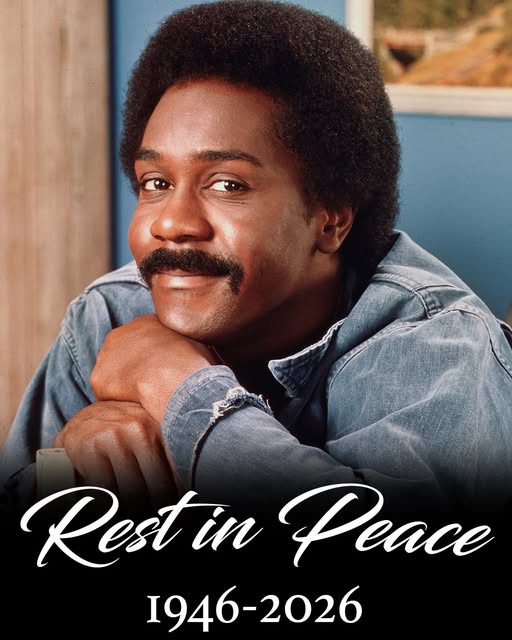
The American cultural landscape lost one of its most grounding and influential figures on the morning of Friday, January 30, 2026. Grady Demond Wilson, the actor whose nuanced portrayal of Lamont Sanford redefined the father-son dynamic for a generation of television viewers, passed away at his home in Palm Springs. He was 79. His death, confirmed by his son, Demond Wilson Jr., was attributed to complications arising from a prolonged battle with cancer. While the family has requested privacy regarding the clinical specifics of his illness, their statements painted a picture of a man who faced his final chapter with the same quiet dignity and spiritual fortitude that characterized his decades-long career in the public eye. “I loved him. He was a great man,” his son shared in a succinct, poignant tribute. It was a sentiment that reverberated across social media and major networks this week, as fans and colleagues alike paused to remember a performer who managed to be both a comedic foil and an emotional North Star.

From Valdosta to the Apollo: The Making of a Performer
Demond Wilson’s journey began on October 13, 1946, in Valdosta, Georgia, though his sensibilities were largely forged in the concrete canyons of New York City. Moving to Manhattan as an infant, Wilson grew up in the city’s vibrant post-war atmosphere, where he quickly discovered a kinship with the stage.
A natural polymath of performance, the young Wilson studied tap dance and ballet, eventually gracing Broadway as a child actor and dancing on the hallowed boards of the Apollo Theater in Harlem. Yet, his early life was also marked by a profound internal dialogue regarding faith. Raised in a devout Catholic home, he served as an altar boy and, as a teenager, seriously contemplated the priesthood. This spiritual inclination was galvanized by a brush with mortality at age 12; his appendix ruptured, an event that brought him to the precipice of death and left him with a lifelong sense of divine purpose.
However, the pulpit would have to wait. His path was redirected by the turbulent political climate of the 1960s and a call to military service.

Purple Heart and the Return to the Craft
Wilson served in the United States Army during the height of the Vietnam War. As a member of the 4th Infantry Division, he was wounded in action, earning a Purple Heart—a badge of sacrifice that he later credited with sharpening his empathy and resilience.
Upon receiving an honorable discharge, Wilson returned to the New York theater scene with a renewed, grittier perspective on life. He worked steadily in Broadway and Off-Broadway productions, refining a grounded acting style that would soon catch the attention of television executives looking to adapt a British hit for American audiences.

The Junkyard Alchemist: ‘Sanford and Son’
In 1972, Wilson’s life—and the trajectory of American sitcoms—changed forever. He was cast as Lamont Sanford in NBC’s Sanford and Son, an adaptation of the BBC’s Steptoe and Son. Playing opposite the legendary, high-octane comedian Redd Foxx, Wilson faced a monumental task: he had to provide the “straight man” stability against Fred Sanford’s explosive antics.
While Redd Foxx delivered the show’s legendary catchphrases—most notably the “Big One” heart attack gags—it was Wilson’s Lamont who provided the show’s intellectual and emotional stakes. Lamont was a man trapped between two worlds: fiercely loyal to his cantankerous father and the family’s South Los Angeles junkyard, yet perpetually yearning for a life of greater sophistication and independence.
The series was a ratings juggernaut and a sociopolitical landmark, breaking racial barriers and humanizing the Black working-class experience in a way rarely seen on network television. Wilson’s performance was a masterclass in subtlety; his exasperated sighs and weary eye-rolls became as iconic as Foxx’s theatrical gasps.

The Second Act: Hollywood Pressures and a Spiritual Rebirth
Following the conclusion of Sanford and Son in 1977, Wilson continued to find work in projects like The Love Boat, Baby… I’m Back!, and The New Odd Couple. However, the transition from an iconic role to a sustainable career in a fickle industry began to take its toll. Wilson spoke candidly in later years about the suffocating nature of typecasting and the “meat-grinder” mentality of Hollywood.
By the early 1980s, the man who had once been an altar boy returned to his spiritual roots. In a transformation that surprised the entertainment industry but made perfect sense to those who knew him, Wilson became an ordained Christian minister.
His ministry was not a vanity project; it was a grueling, hands-on commitment. He founded a church in Southern California and focused heavily on community outreach, specifically developing programs to help formerly incarcerated individuals find a foothold in society. For Wilson, this was not a retirement, but a promotion to a higher calling.

The Reflective Author and Family Anchor
Wilson’s intellectual curiosity eventually manifested in his writing. His memoir, Second Banana: The Bittersweet Memoirs of the Sanford and Son Years, offered a raw, introspective look at the complexities of working alongside Redd Foxx and the psychological cost of fame. He also authored The New Age Millennium, a critical, faith-based examination of cultural movements and symbolism, showcasing a mind that was deeply engaged with the philosophical currents of his time.
In his private life, Wilson was a man of remarkable stability. He married Cicely Johnston in 1974, a union that lasted over five decades and produced six children. His publicist noted that his life remained “rooted in faith, service, and compassion,” a trifecta that defined his daily existence far more than any Nielsen rating ever could.

A Lasting Resonance
Demond Wilson belonged to that rare echelon of actors who could convey an entire narrative with a single look. Whether he was playing the long-suffering son on a 1970s soundstage or counseling a struggling soul in his community center, he moved through the world with an unmistakable authenticity.
Today, as Sanford and Son continues to thrive in syndication and on streaming platforms, new generations are discovering the “son” who stood his ground in the junkyard. Wilson’s legacy is a patchwork of Purple Hearts, comedic timing, spiritual leadership, and a steadfast commitment to family. He lived a life that transcended the screen, reminding us that fame is a temporary costume, but character is eternal.
The junkyard is quiet now, but the heart of it—the man who kept it all together—will continue to beat in the memory of a grateful nation.