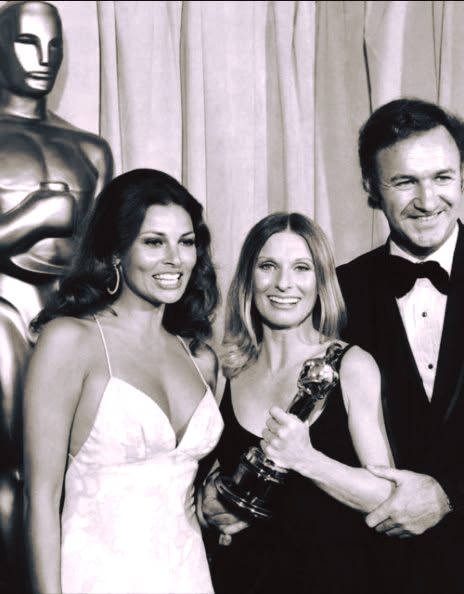
On the evening of April 10, 1972, the Dorothy Chandler Pavilion in Los Angeles did not just host the 44th Academy Awards; it served as the coordinates for a seismic cultural fracture. To the casual observer tuning in from living rooms across a fractured America, it was the usual display of klieg lights, tuxedos, and rehearsed smiles. But for those watching closely from the press rows, the air inside the auditorium carried the distinct, charged ozone smell of a lightning strike. Hollywood was standing directly at a crossroads, trapped in a generational tug-of-war between the fading, polished certainty of the old studio system and a raw, untamed, director-driven era that would come to define the decade.
The 1972 Oscars have endured in the cultural imagination not because of a single scandalous outburst or a shocking upset, but because the entire night functioned as a living, breathing microcosm of a society in upheaval. Outside the theater walls, the early 1970s were defined by the bitter hangover of the sixties—Vietnam, the rumblings of Watergate, fracturing social values, and a profound, systemic skepticism toward traditional authority. Inside, that same skepticism was dismantling the dream factory from the inside out. The idealized, larger-than-life heroes who had populated the silver screen for decades were being unceremoniously replaced by flawed, morally compromised protagonists who felt like they had been pulled straight off the gritty, sun-bleached asphalt of American cities.
The battle lines of this cinematic revolution were drawn right there on the ballot. The night’s big winner, William Friedkin’s The French Connection, was an aggressive, unapologetic declaration of this new era. It was a film built on documentary-style urgency, handheld camera work, and a profound moral ambiguity that offered no easy answers. When it took home Best Picture, it wasn’t just a victory for a movie; it was a coup d’état against the traditional, neatly wrapped narratives of classical Hollywood. Sharing the spotlight was Peter Bogdanovich’s The Last Picture Show, a haunting, black-and-white elegy for fading Americana that treated small-town isolation with an emotional honesty so devastating it felt almost voyeuristic. These films didn’t just entertain; they challenged the very purpose of commercial cinema, trading formulaic escapism for a relentless pursuit of psychological truth.
This profound friction between the past and the future was written entirely across the visual landscape of the ceremony itself. When you look back at the archival footage and the candid photographs from that night, you are looking at a historical artifact of transition frozen in time. The seating chart was a battlefield of iconography. In one row sat the architects of Hollywood’s Golden Age—icons who had spent their careers enveloped in the highly managed, pristine glamour of the old studio lot system, looking out at the room with a mixture of defiance and quiet bewilderment. A few rows over sat the vanguard of the New Hollywood movement: young, hungry, often disheveled filmmakers and actors who carried the restless, kinetic energy of a generation determined to break the old machine and rebuild it in their own image.
The very posture of the attendees, the shifting dynamics of the applause, and even the literal spacing between the old guard and the new breed spoke volumes. It was part celebration, part wake. The Academy, an institution historically notorious for its conservative, risk-averse tastes, was forced to publicly acknowledge that the ground had shifted beneath its feet. By honoring works of such gritty realism and stylistic experimentation, the establishment wasn’t just handing out gold statuettes; it was surrendering to the realization that Hollywood could no longer operate under a single, dominant vision of what a movie was supposed to be.
What makes the 1972 ceremony continue to resonate with critics and historians decades later is the sheer weight of what was born during that period of uncertainty. The creative risks validated that night opened the floodgates for a decade of unparalleled cinematic expression, establishing a legacy of complex character development, non-linear storytelling, and raw visual identity that modern filmmakers still strip-mine for inspiration today.
Ultimately, the enduring fascination with the 44th Academy Awards lies in its beautifully complex, layered duality. It was a night of profound paradox: a glittering, black-tie event that validated stories about the gutters; a celebration of an industry’s future that was deeply haunted by its passing past; a moment where continuity and disruption shared the exact same stage. Peel back the layers of vintage glamour, and the true narrative of the night reveals itself. It was the evening an entire industry stood before the camera and, in real-time, underwent a painful, beautiful, and permanent artistic rebirth.