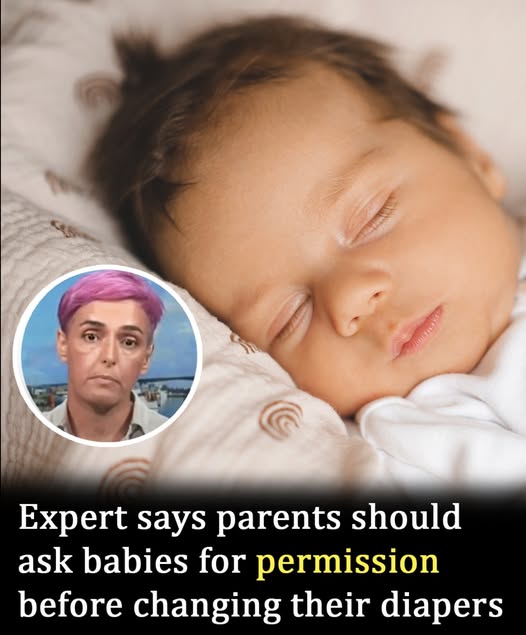
Debate Erupts Over Suggestion Parents Should Ask Babies for “Consent” Before Diaper Changes
A Parenting Idea That Sparked Global Reaction
A proposal from Australian sexuality educator has triggered a heated debate online after she suggested that parents should ask their infants for “consent” before changing their diapers.
The suggestion, which Carson says is meant to promote respect for children’s bodily autonomy, quickly spread across social media and drew strong reactions from both supporters and critics. While some see the idea as a thoughtful way to encourage communication with children, others argue it pushes the concept of consent into unrealistic territory.
The controversy intensified after Carson discussed the idea during an interview with Australia’s national broadcaster, , commonly known as ABC.
The Idea Behind the Approach
Carson, who works as a speaker and author focusing on sexuality education and healthy relationships, says the practice is not about expecting a verbal response from a baby.
Instead, she describes it as a way to introduce the concept of respect for personal boundaries from the earliest stages of life.
According to Carson, parents could narrate what they are doing during routine care tasks. For example, a caregiver might say something like, “I’m going to change your diaper now, is that okay?” and then pause briefly before continuing.
The pause, Carson argues, allows parents to observe a baby’s non-verbal signals—such as eye contact or body movements—helping establish a two-way interaction.
“Of course, a baby isn’t going to respond with words,” Carson acknowledged in the interview. “But when you leave space for their response, you’re letting them know their reactions matter.”
Focus on Early Communication
Supporters say the suggestion fits into a broader philosophy in child development that encourages caregivers to respond to infants’ cues.
Babies often communicate through facial expressions, sounds, and movements long before they develop language. Many pediatric specialists encourage parents to pay attention to these signals as part of building strong early relationships.
Those who defend Carson’s idea argue that narrating caregiving actions can help children become more aware of what is happening around them while reinforcing a respectful environment.
Criticism From Commentators and Experts
However, the idea has faced strong criticism from some commentators and parenting experts.
Australian columnist , editor of The Spectator Australia, dismissed the proposal as excessive, while American parenting author and psychologist criticized the concept in a newspaper column.
Rosemond argued that infants lack the cognitive ability to understand consent and suggested that framing routine hygiene tasks in this way could confuse parents about their responsibilities.
Critics emphasize that diaper changes are essential for a baby’s health and comfort and should not be treated as optional decisions.
Social Media Reaction
The conversation quickly spread across social platforms, where many users responded with humor or skepticism.
Some pointed out that when babies cry because of a dirty diaper, the message is already clear. Others mocked the idea by comparing it to asking pets for permission before cleaning their litter boxes.
Several commenters also stressed that leaving a baby in a soiled diaper can lead to skin irritation and infection, making prompt changes necessary regardless of any symbolic conversation.
A Divided Response
Despite the backlash, a number of supporters defended Carson’s broader intention. They argued that showing respect for children—even when they are very young—can help foster healthy communication and trust.
Some observers took a middle-ground position, suggesting that while talking to infants during caregiving is positive, describing the process as “asking permission” may be an exaggeration that distracts from the underlying message.
For many parents and experts, the core question remains whether the language of consent should be introduced so early—or whether it makes more sense once children are old enough to understand it.
An Ongoing Parenting Debate
The discussion highlights how parenting philosophies continue to evolve as society places greater emphasis on boundaries, communication, and emotional development.
While opinions differ widely, most experts agree on one point: responsive caregiving—paying attention to a child’s needs and signals—plays a critical role in early development.
Whether Carson’s specific suggestion becomes widely accepted or remains controversial, the debate has sparked a broader conversation about how parents communicate with children from the very beginning of life.