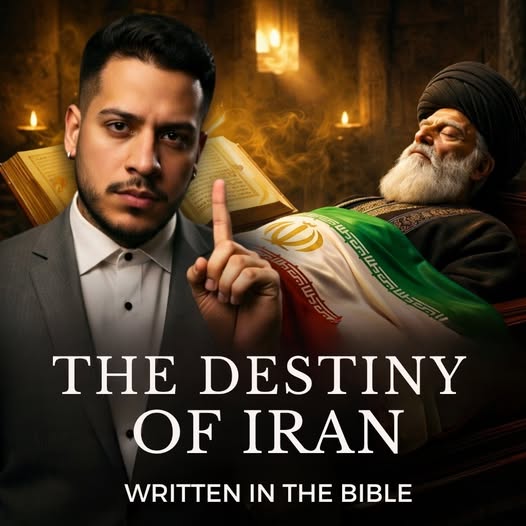
There are nations whose stories are told mainly through wars, revolutions, and shifting alliances. Then there are nations whose names appear in Scripture long before modern borders existed. Iran, known in the Bible as Persia, belongs to the second category.
From Genesis to the prophets and into the New Testament era, Persia does not appear as a passing reference. It appears repeatedly, sometimes in moments that shape the direction of biblical history itself.
Ancient roots in the Table of Nations
The first biblical connection appears in Genesis 10, often called the Table of Nations. This chapter outlines the descendants of Noah’s sons and traces how early peoples spread across different regions.
Two names in that list are traditionally linked to the territory of modern Iran.
Madai, a son of Japheth, is associated with the Medes.
Elam, a son of Shem, is connected to the region in the southwest of present-day Iran.
These two groups, the Medes and the Persians, would later unite to form the Medo-Persian Empire, one of the most powerful empires of the ancient world. Long before Persia became a political superpower, its ancestral roots were already embedded in the biblical narrative.
Early conflict and a recurring pattern
In Genesis 14, Scripture records what is often described as the first international conflict in the Bible. Chedorlaomer, king of Elam, leads a coalition of eastern kings against cities in Canaan. During this campaign, Lot, Abraham’s nephew, is captured.
Abraham responds with a small force of 318 trained men and defeats the coalition in a night rescue mission.
This episode introduces a pattern that echoes throughout later biblical history. Powers from the East confront the people of the promise, and the outcome ultimately rests not on military strength alone, but on divine intervention.
Persia as a force of restoration
Centuries later, Persia rises to global dominance. What is striking in the biblical record is that this rise is foretold.
In Isaiah 45, written around the eighth century BC, the prophet names Cyrus long before his birth. More than a century later, Cyrus the Great conquers Babylon. Instead of destroying the Jewish exiles, he allows them to return to Jerusalem.
He authorizes the rebuilding of the Temple.
He returns sacred temple objects taken by Babylon.
He supports the restoration of the city.
Among the major empires that ruled over Israel, Persia stands out for enabling restoration rather than imposing devastation. In this context, it becomes an unexpected instrument of renewal.
Daniel’s visions and imperial transitions
The prophet Daniel, living in exile, interprets King Nebuchadnezzar’s dream in Daniel 2. The statue he describes represents successive empires. The head of gold symbolizes Babylon. The chest and arms of silver are commonly understood to represent the Medo-Persian Empire.
In Daniel 8, a vision of a ram with two horns, identified with Media and Persia, is later overcome by a swift male goat, widely associated with Alexander the Great. Historically, the Greek conquest of Persia unfolded with remarkable speed, aligning with the imagery described in the text.
Here again, Persia occupies a central place in the unfolding sequence of empires.
Esther and preservation within the empire
The book of Esther shifts the focus from prophecy to personal courage within the Persian court. In Susa, the Persian capital, a Jewish woman named Esther becomes queen.
When Haman plots to annihilate the Jewish people, Esther risks her life by approaching the king without invitation. The decree of destruction is overturned, and what was meant to be a day of mourning becomes a celebration.
Within Persia’s imperial structure, protection emerges instead of persecution. Once more, the empire becomes part of a larger redemptive movement.
The Magi and the East

In the Gospel of Matthew, wise men from the East arrive in Jerusalem seeking the newborn king. While the text does not name their homeland explicitly, many scholars connect them with traditions rooted in the Persian world, known historically for scholarship in astronomy and interpretation of signs.
If this connection is accurate, Persia appears again at a pivotal moment, this time at the birth of Jesus, recognizing significance where others did not.
Prophetic references to the future
In Ezekiel 38, Persia is listed among nations involved in a future coalition against Israel. The imagery is complex and highly symbolic, and interpretations vary widely among scholars.
Jeremiah 49 speaks of judgment upon Elam, yet also includes language of eventual restoration. The prophetic pattern is not one dimensional. It weaves together themes of accountability and renewal.
Throughout Scripture, Persia is not portrayed solely as an adversary or solely as an ally. It moves through cycles of conflict, judgment, participation, and restoration.
A nation woven into a larger narrative
From Abraham’s era to the Persian kings, from Daniel’s visions to Esther’s courage, and possibly to the Magi at the birth of Christ, Persia appears at key turning points.
- Sometimes as a conquering force.
- Sometimes as a liberating power.
- Sometimes as part of prophetic warning.
- Sometimes as a channel of restoration.
The biblical portrait of Persia reflects more than geopolitics. It reflects a theological perspective in which nations, like individuals, move within a broader divine purpose.
Approaching the topic thoughtfully
For those interested in exploring this theme further, reading the primary passages directly offers important context. Genesis 10 and 14, Isaiah 45, Daniel 2 and 8, Esther, Ezekiel 38, and Jeremiah 49 each contribute a piece to the picture.
It is also wise to consider historical background and multiple theological perspectives. Biblical prophecy often blends historical events, symbolic language, and spiritual themes. Interpreting it responsibly requires patience and context rather than reacting to contemporary headlines alone.
The story of Persia in the Bible is not merely the story of an ancient empire. It is a reminder that nations rise and fall within larger currents of history. In Scripture, Persia becomes at different times an instrument of confrontation, of liberation, and of renewal.
In that complexity lies a broader message. History, in the biblical view, unfolds within a sovereignty that moves beyond human power, and no nation’s role is fixed to a single chapter.