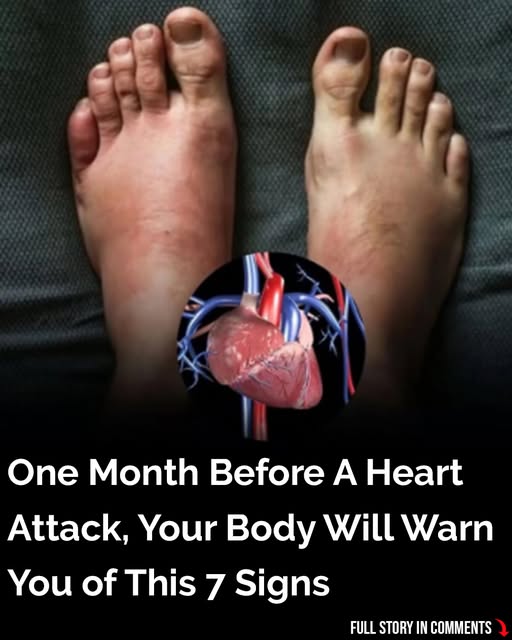
A heart attack is frequently characterized in popular media as a sudden, cataclysmic event that strikes without warning. However, medical reality tells a different story. Your body often begins broadcasting subtle, life-saving distress signals as early as thirty days before a cardiac event occurs. These early indicators are routinely misattributed to the mundane—stress, chronic fatigue, or simple indigestion—but failing to recognize them as a “plea for attention” from the heart can be a fatal oversight.
The stakes could not be higher. According to data from the Centers for Disease Control and Prevention (CDC), cardiovascular disease claims a life in the United States every 33 seconds. It remains the undisputed leading cause of mortality for both men and women across the country.
“A heart attack, also called a myocardial infarction, happens when a part of the heart muscle doesn’t get enough blood,” the CDC states. “The more time that passes without treatment to restore blood flow, the greater the damage to the heart muscle.”
Recent research published in the National Library of Medicine underscores the existence of a “pre-attack” window. By identifying the following symptoms, individuals can secure the medical intervention necessary to preempt a crisis.
1. The Exhaustion Paradox
While fatigue is a staple of modern life, “unusual fatigue” is a primary red flag, particularly for women. This isn’t the tiredness that follows a long day; it is a profound, systemic drain that manifests weeks before an attack.
-
The Indicators: Waking up exhausted after a full night’s rest; finding simple tasks like stair-climbing or walking to the mailbox unusually draining; or a sudden, heavy fatigue that rest fails to remedy.
2. Unexplained Shortness of Breath
If your lungs feel as though they are struggling for oxygen despite a lack of physical exertion, your heart may be failing to pump efficiently.
-
-
The Indicators: Gasping for air during light activity or while sedentary; experiencing lightheadedness or vertigo alongside breathlessness; or finding that breathing becomes significantly more difficult when lying flat.
-
3. Atypical Chest Discomfort
Chest pain remains the hallmark of cardiac distress, yet its presentation is often misunderstood. It is not always an agonizing “elephant on the chest.”
-
The Indicators: A persistent sense of tightness, squeezing, or pressure; pain that is intermittent rather than constant; or a sensation easily confused with heartburn or acid reflux. For women, these symptoms are often less intense, leading many to dismiss them as simple indigestion.
4. Referred Pain: The Upper Body Chain
The heart’s distress signals often travel along nerve pathways to other parts of the upper body. Women are statistically more likely than men to experience pain in these secondary locations.
-
The Indicators: A dull, persistent ache in the jaw, neck, or back; discomfort that radiates down one or both arms; or pain that fluctuates in intensity and can even interrupt sleep.
5. Gastrointestinal Distress
Nausea and stomach pain are among the most frequently misdiagnosed precursors to a heart attack, often mistaken for the flu or food poisoning.
-
The Indicators: Chronic nausea or a “sick” feeling in the gut; unexplained vomiting; or an intense, heavy sensation in the upper abdomen.
6. Cold Sweats and Sudden Vertigo
A sudden onset of diaphoresis—excessive sweating—unrelated to temperature or exercise is a classic sign of sympathetic nervous system activation in response to heart stress.
-
The Indicators: Profuse, clammy sweating that occurs while at rest; feeling faint or lightheaded; or a sudden onset of symptoms that mimic a panic attack.
7. Disruptions in Sleep Architecture
The weeks leading up to a cardiac event are often marked by significant changes in sleep quality, as the body struggles with underlying cardiovascular strain.
-
The Indicators: New-onset insomnia or difficulty staying asleep; waking up feeling breathless or anxious; and night sweats that are not attributed to other hormonal changes.
8. Pathological Palpitations
When the heart begins to flutter, race, or skip beats, it may be signaling more than just an overindulgence in caffeine.
-
The Indicators: A rapid, irregular pulse; a thumping sensation in the chest; or a feeling of systemic weakness paired with an irregular rhythm.
The Verdict: Trust the Instinct
If you experience a cluster of these symptoms—particularly if they manifest suddenly or feel “out of character” for your body—the medical consensus is clear: contact a healthcare provider immediately.
In the world of cardiology, time is muscle. Listening to your body, trusting your instincts, and refusing to normalize unusual symptoms are the most effective tools you have to survive.