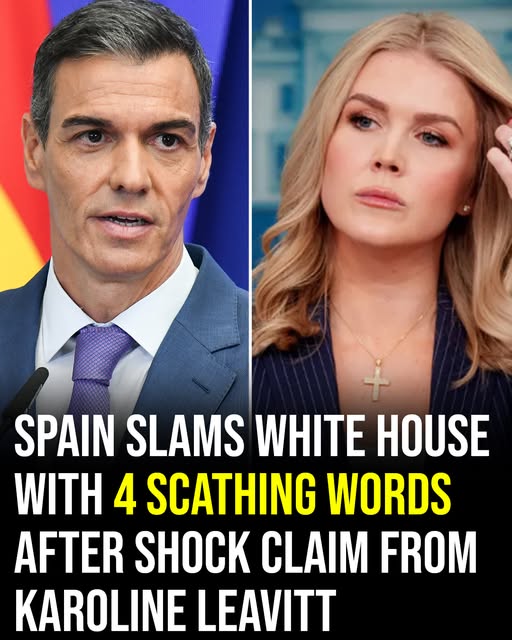
The diplomatic chasm between Madrid and Washington has widened into a full-scale crisis, as Spain forcefully rebukes what it calls “false assertions” from the White House regarding its stance on the escalating war in Iran. The clash represents one of the most significant fractures in the NATO alliance in recent years, pitting Spanish Prime Minister Pedro Sánchez’s commitment to international law against President Donald Trump’s “with us or against us” foreign policy.
The latest escalation unfolded late Wednesday, following a series of high-stakes verbal volleys that have left the bilateral relationship in tatters. The root of the discord dates back to Sunday, when Sánchez took the extraordinary step of barring the United States from utilizing Spanish military bases—crucial strategic hubs for Mediterranean operations—to launch airstrikes against Iranian targets. Sánchez condemned the intervention as “unjustified and dangerous,” categorizing the attacks as a blatant breach of international law.
“Spain Has Been Terrible”
The refusal to grant base access reportedly infuriated President Trump. During a characteristic outburst in the Oval Office, the President singled out Spain as a primary antagonist to American interests.
“Spain has been terrible,” the President remarked, signaling a shift toward economic retaliation. “In fact, I told Scott [Treasury Secretary Scott Bessent] to cut off all dealings with Spain… they were unfriendly so I told him Spain has absolutely nothing that we need, other than great people, they have great people. But they don’t have great leadership.”
Most provocatively, the President suggested that the U.S. might simply ignore Madrid’s sovereignty, hinting that American forces could utilize the bases regardless of the host nation’s approval.
A Nation Stands Firm
The rhetoric from Washington prompted an immediate and solemn address to the nation from Prime Minister Sánchez on Wednesday morning. Reaffirming Spain’s autonomy, Sánchez made it clear that his government would not be intimidated by the threat of American reprisals.
“We are not going to be accomplices to something that is bad for the world and contrary to our values and interests, simply because of fear of reprisals from some,” Sánchez declared. He summarized the national sentiment with a slogan that resonates deeply in Spanish history: ”No a la guerra” — “No to war.”
In his address, Sánchez drew a direct line back to the 2003 invasion of Iraq, a conflict Spain initially supported under a previous administration. He argued that the intervention resulted in “disastrous consequences,” including a surge in jihadist terrorism and a destabilizing migration crisis in the eastern Mediterranean—mistakes he is determined not to repeat.
The “False Understanding” at the White House
As the standoff intensified, a wave of confusion emanated from the White House briefing room later Wednesday. Press secretary Karoline Leavitt suggested to reporters that Madrid had buckled under the President’s pressure.
“I think they heard the president’s message yesterday loud and clear,” Leavitt stated. “It is my understanding over the past several hours they’ve agreed to cooperate with the US military.”
The response from Madrid was instantaneous and categorical. Foreign Minister José Manuel Albares dismissed Leavitt’s claims as a total fabrication.
“That’s not true,” Albares said in an evening broadcast on Cadena Ser. “We categorically deny it. Spain’s position has not changed one iota. Our ‘no to war’ stance remains clear and unequivocal.” In a pointed rebuke of the White House’s messaging, he added: “She may be the White House press secretary, but I’m the foreign minister of Spain and I’m telling her that our position hasn’t changed at all.”
Sovereignty Over “Vassalage”
The sentiment was echoed across the Spanish cabinet. A government spokesperson released a statement shortly after Albares’ interview, reiterating that there had been no shift in policy. Deputy Prime Minister Maria Jesus Montero struck an even more defiant tone on March 4, asserting that Spain “will not be vassals” to another country, regardless of its superpower status.
As of Thursday, the stalemate continues. With Washington signaling a potential “cutoff” of dealings and Madrid refusing to yield its soil for the bombardment of Iran, the future of Spain’s role within the traditional Western security framework remains precariously uncertain.